
Table of Contents
ToggleWhy Early Childhood Memories Matter More Than We Think
We all carry stories from our past, yet early childhood memories hold a special place in shaping who we are. These memories do not just sit quietly in our minds. Instead, they actively influence our emotions, beliefs, and decisions. From a psychological perspective, they form the foundation of identity, emotional regulation, and relationships.
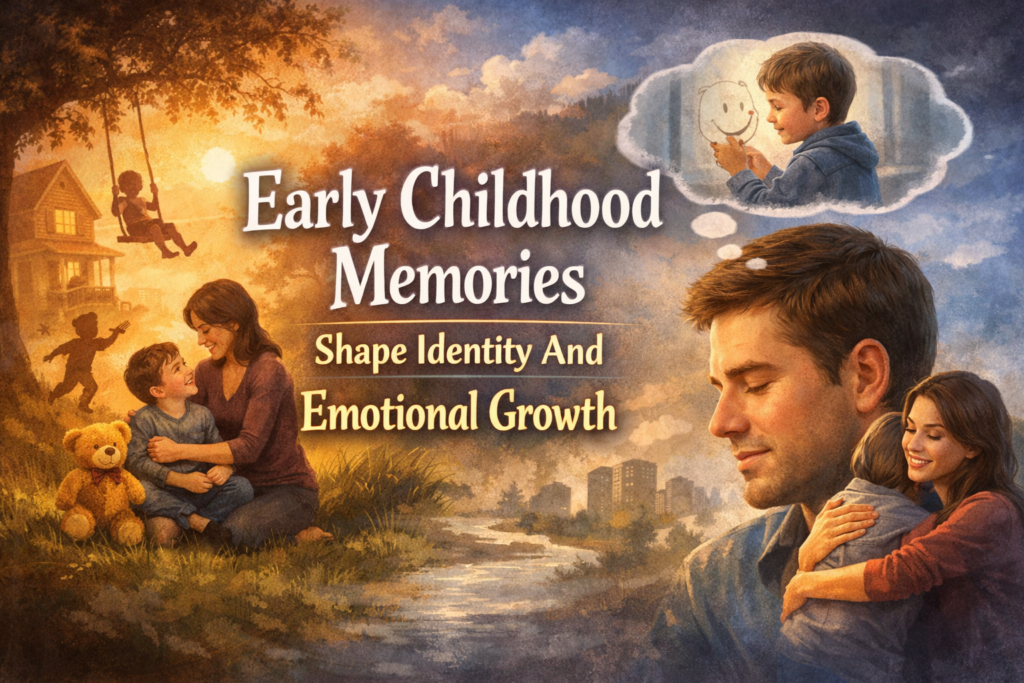
I still remember a rainy afternoon from my childhood. The smell of wet earth filled the air while I sat near a window, drawing shapes on fogged glass. At that moment, I felt safe. Years later, I realized that this simple memory shaped my sense of comfort during stressful times.
This is the power of early childhood memories. They are not just recollections. They are emotional blueprints.
What Are Early Childhood Memories in Psychology
From a psychological viewpoint, early childhood memories refer to experiences stored from roughly ages three to eight. Although many people believe memory starts later, research shows that emotional experiences from early years stay deeply encoded.
Moreover, these memories are often sensory rich. They involve smells, sounds, and feelings rather than detailed narratives. Because of this, they influence subconscious behavior more than conscious thought.
For example, a child who receives warmth and attention often develops trust. On the other hand, a child exposed to neglect may carry anxiety into adulthood. Therefore, early childhood memories act as silent teachers shaping emotional responses.
How Early Childhood Memories Shape Emotional Development
To understand emotional growth, we must look at how early childhood memories guide feelings. Children do not analyze experiences logically. Instead, they absorb emotions directly.
As a result, repeated experiences create emotional patterns. If a child feels secure, they learn that the world is safe. Conversely, if they feel fear often, they may grow into cautious adults.
I remember a time when I got lost in a crowded market. Panic rushed through me until I saw my parent again. That relief taught me something important. Even in chaos, safety can return.
Because of such moments, early childhood memories influence how we handle fear, stress, and relationships later in life.
The Role of Early Childhood Memories in Identity Formation
Identity does not form overnight. Instead, it grows through layers of early childhood memories. Each memory adds meaning to how we see ourselves.
For instance, praise during childhood often builds confidence. In contrast, criticism may lead to self doubt. Over time, these experiences become internal narratives.
Furthermore, children interpret events personally. If something goes wrong, they may believe it is their fault. This belief can stay for years unless challenged.
Therefore, early childhood memories are not just about the past. They shape the story we tell ourselves every day.
Why Some Early Childhood Memories Stay Strong
Not all memories last equally. So why do certain early childhood memories remain vivid while others fade?
The answer lies in emotion. Strong emotions such as joy, fear, or love enhance memory storage. The brain prioritizes emotionally significant events because they help survival and learning.
Additionally, repetition strengthens memory. Daily routines or repeated experiences become deeply embedded. For example, bedtime stories or family dinners often remain clear even after many years.
Thus, early childhood memories stay alive when they carry emotional weight or repeated exposure.
How Early Childhood Memories Influence Adult Behavior
As adults, we often believe we act rationally. However, many behaviors stem from early childhood memories.
For example, someone who felt ignored as a child may seek constant validation. Similarly, a person raised in a supportive environment may show resilience during challenges.
I once noticed how I react strongly to criticism. After reflection, I realized it connects to a childhood moment when I felt embarrassed in class. That single experience shaped my sensitivity.
Therefore, early childhood memories continue to guide behavior even when we are unaware of their presence.
The Hidden Impact on Relationships
Relationships often reflect patterns rooted in early childhood memories. Attachment styles, for instance, develop based on early interactions with caregivers.
Secure attachment leads to trust and emotional openness. Meanwhile, inconsistent care may result in anxiety or avoidance in relationships.
Moreover, communication styles often mirror early experiences. A child who felt heard learns to express emotions clearly. In contrast, a child who felt dismissed may struggle to share feelings.
Because of this, understanding early childhood memories can improve relationship dynamics and emotional awareness.
Can Early Childhood Memories Change Over Time
Interestingly, early childhood memories are not fixed. They can evolve as we reinterpret experiences.
Psychology shows that memory is reconstructive. Each time we recall an event, we reshape it slightly. As adults, we add meaning and context that we did not have as children.
For example, a strict parent may have seemed harsh during childhood. However, later understanding may reveal their actions came from concern.
Thus, early childhood memories can shift in meaning, allowing emotional healing and growth.
Healing Through Awareness of Early Childhood Memories
Awareness plays a crucial role in transforming the impact of early childhood memories. When we recognize patterns, we gain the power to change them.
Therapy often focuses on revisiting early experiences. By doing so, individuals can process emotions and reframe beliefs.
For instance, someone who felt unworthy as a child can learn to challenge that belief. Over time, new experiences can reshape emotional responses.
Therefore, understanding early childhood memories is not about dwelling in the past. It is about creating a healthier present.
A Story That Connects It All
Let me return to that rainy afternoon by the window. At first, it seemed like a simple moment. Yet, it carried a deeper meaning. It represented safety, creativity, and calmness.
Years later, during stressful situations, I find myself drawn to similar environments. Soft rain, quiet spaces, and reflective moments bring comfort.
This shows how early childhood memories continue to guide preferences and emotional states. They shape not only who we are but also what we seek.
Practical Ways to Reflect on Early Childhood Memories
If you want to understand yourself better, reflecting on early childhood memories can help. Start by asking simple questions:
- What is your earliest memory of happiness
- When did you first feel fear or rejection
- Which moments still feel vivid today
Next, pay attention to emotions linked to these memories. Emotions often reveal deeper meanings.
Finally, connect past experiences to present behavior. You may notice patterns that explain your reactions and choices.
Through this process, early childhood memories become tools for self discovery rather than hidden influences.
Conclusion: The Lasting Power of Early Childhood Memories
In the end, early childhood memories are more than fragments of the past. They are living influences shaping emotions, identity, and relationships.
They guide how we see the world, how we respond to challenges, and how we connect with others. Although we cannot change the past, we can understand it.
By exploring early childhood memories, we gain insight into ourselves. More importantly, we create the opportunity for growth, healing, and transformation.
So the next time a small memory surfaces, pause for a moment. It may hold the key to understanding who you are today.