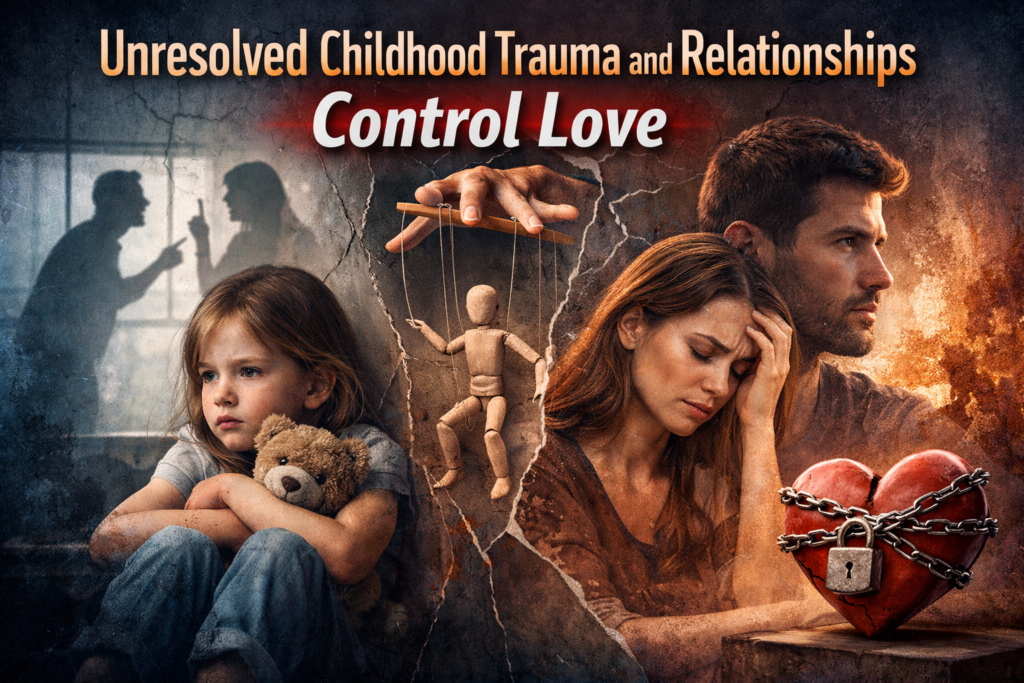

Many people struggle in love without knowing why. They try hard, yet the same patterns repeat. They feel confused, hurt, or disconnected. Often, the root lies deeper than the present moment. It lives in the past. More specifically, it lives in unresolved childhood trauma and relationships.
This topic matters because our early experiences shape how we think, feel, and connect. When those experiences include pain, neglect, or fear, they do not simply disappear. Instead, they quietly influence our adult lives. Therefore, understanding unresolved childhood trauma and relationships can change how we love and how we heal.
Table of Contents
ToggleWhat Is Childhood Trauma and Why It Matters
Childhood trauma refers to distressing experiences during early years. These may include emotional neglect, abuse, loss, or constant conflict. Even subtle events can leave deep marks. For example, a child who feels unseen or unheard may grow into an adult who doubts their worth.
As a result, childhood trauma and relationships become closely connected. The way we bond with caregivers becomes the blueprint for future relationships. If love once felt unsafe, confusing, or conditional, we may carry those beliefs forward.
Moreover, the brain learns quickly in childhood. It builds patterns for survival. While these patterns help in early life, they often create problems later. That is where unresolved childhood trauma and relationships begin to affect adult connections.
How Trauma Shapes Adult Relationships
To begin with, trauma influences how we see ourselves. If a child learns they are not enough, they may seek constant validation as an adult. On the other hand, they may avoid closeness to protect themselves from pain.
Because of this, unresolved childhood trauma and relationships often show up in specific ways:
1. Fear of Abandonment
Many people fear being left. They may cling to partners or feel anxious when alone. This fear usually stems from early experiences of loss or inconsistency.
2. Difficulty Trusting Others
Trust forms in childhood. When it breaks early, rebuilding it becomes hard. Therefore, people with unresolved childhood trauma and relationships may struggle to open up.
3. Emotional Reactivity
Small conflicts may trigger strong reactions. This happens because the brain links present situations with past pain. As a result, emotions feel overwhelming.
4. Avoidance of Intimacy
Some individuals keep distance. They avoid deep emotional bonds. This protects them from hurt but also limits connection.
Clearly, childhood trauma and relationships influence not just how we love but also how we respond to love.
The Hidden Patterns You May Not Notice
Interestingly, many people do not recognize these patterns. They believe their struggles come from current partners. However, the deeper cause often lies within.
For instance, someone may choose emotionally unavailable partners again and again. Another person may sabotage healthy relationships. These behaviors are not random. They reflect unresolved childhood trauma and relationships.
Furthermore, trauma can shape communication styles. Some people shut down during conflict. Others become defensive or aggressive. These responses often mirror what they experienced growing up.
In addition, people may recreate familiar pain. This may sound surprising, yet it feels normal to the brain. Therefore, childhood trauma and relationships can lead individuals to repeat unhealthy cycles.
Why Healing Is Essential
Healing is not just helpful. It is necessary. Without healing, patterns continue. Relationships suffer. Emotional pain grows.
However, when people address unresolved childhood trauma and relationships, real change becomes possible. They begin to understand their triggers. They learn new ways to respond. Most importantly, they start to build healthier connections.
Healing also improves self awareness. People learn to separate past experiences from present reality. As a result, they respond more calmly and clearly.
Steps to Heal and Build Better Relationships
Although healing takes time, it is achievable. The following steps can help break the cycle of unresolved childhood trauma and relationships:
1. Acknowledge Your Past
First, accept that your childhood shaped you. This is not about blame. Instead, it is about awareness. Once you recognize patterns, you can begin to change them.
2. Identify Triggers
Next, notice what activates strong emotions. Ask yourself why certain situations feel intense. Often, they connect to past experiences.
3. Practice Emotional Regulation
Learn to calm your mind and body. Techniques like deep breathing or mindfulness can help. Over time, this reduces reactivity linked to unresolved childhood trauma and relationships.
4. Seek Professional Support
Therapy offers a safe space to explore pain. A skilled therapist can guide you through healing. This step can make a significant difference.
5. Build Healthy Communication
Clear and honest communication strengthens relationships. Express your needs without fear. Listen with openness.
6. Develop Self Compassion
Be kind to yourself. Healing is not linear. Mistakes will happen. Still, each step forward matters.
By following these steps, individuals can transform childhood trauma and relationships into opportunities for growth.
The Role of Attachment Styles
Attachment theory helps explain how early bonds shape adult behavior. There are four main styles: secure, anxious, avoidant, and disorganized.
People with secure attachment feel comfortable with closeness. However, those affected by unresolved childhood trauma and relationships often develop insecure styles.
For example, anxious individuals seek constant reassurance. Avoidant individuals withdraw from intimacy. Disorganized individuals show mixed behaviors.
Understanding your attachment style can provide clarity. It reveals why you act in certain ways. More importantly, it shows what needs healing.
Breaking the Cycle
Breaking the cycle of unresolved childhood trauma and relationships requires conscious effort. It involves changing long standing habits and beliefs.
First, challenge negative thoughts about yourself. Replace them with balanced perspectives. Next, choose partners who support growth rather than reinforce old wounds.
Also, set healthy boundaries. Boundaries protect your emotional well being. They create space for respect and trust.
In addition, practice consistency. Small changes over time lead to lasting transformation. Each positive action weakens old patterns linked to childhood trauma and relationships.
How Healthy Relationships Support Healing
Interestingly, relationships themselves can become a source of healing. A supportive partner can provide safety and understanding. This helps rewire the brain.
When people experience kindness and respect, they begin to trust again. Slowly, the effects of unresolved childhood trauma and relationships start to fade.
However, this requires effort from both partners. Open communication, patience, and empathy are essential. Together, they create a secure environment for growth.
Common Myths About Trauma and Relationships
Many myths surround this topic. These myths can prevent healing.
Myth 1: Time Heals Everything
Time alone does not heal trauma. Without active effort, patterns remain.
Myth 2: Trauma Only Comes from Extreme Events
Even subtle experiences can cause deep wounds. Therefore, childhood trauma and relationships are more common than people think.
Myth 3: You Cannot Change
Change is always possible. With awareness and effort, people can overcome unresolved childhood trauma and relationships.
Moving Forward With Awareness
Awareness is the first step toward change. When people understand how their past affects their present, they gain control.
Instead of reacting automatically, they respond with intention. This shift transforms relationships. It replaces fear with clarity and connection.
Moreover, healing allows individuals to create new patterns. They no longer feel trapped by unresolved childhood trauma and relationships. Instead, they build relationships based on trust, respect, and love.
Final Thoughts
In conclusion, unresolved childhood trauma and relationships play a powerful role in adult life. They shape how we connect, communicate, and experience love. However, they do not define our future.
With awareness, effort, and support, healing is possible. People can break old cycles. They can build healthier and more fulfilling relationships.
Ultimately, understanding childhood trauma and relationships is not just about looking back. It is about moving forward with strength and clarity.

Rocky
Rocky writes relatable stories and reflective pieces for BeChildAgain, focusing on nostalgia, relationships, life lessons, and the feelings people often keep inside. His work is written in an honest and emotional style to help readers feel seen, connected, and understood.
View all posts