
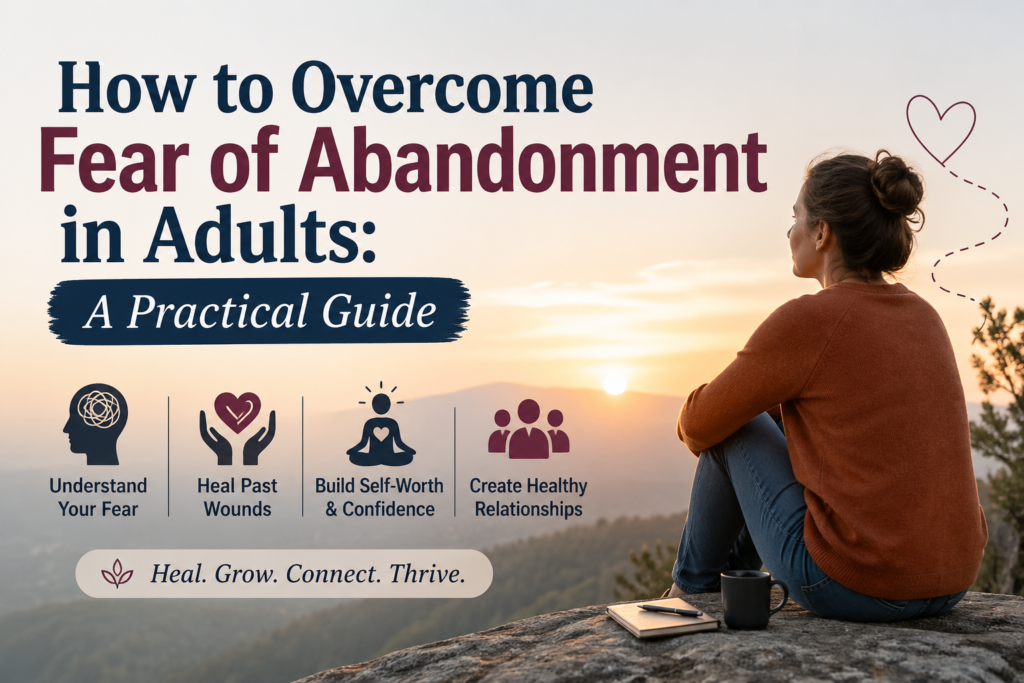

Fear can quietly shape how you think, feel, and act in relationships. Among the most powerful emotional struggles is the fear of abandonment in adults. It can lead to anxiety, insecurity, and patterns that push people away instead of bringing them closer. However, you can change this pattern with awareness and consistent effort. In this guide, you will learn how to overcome fear of abandonment in adults using simple, practical steps. Each section focuses on real solutions that you can apply in daily life.
What Is Fear of Abandonment in Adults?
The fear of abandonment in adults is a deep worry that people you love will leave you. This fear may come from past experiences such as childhood neglect, emotional loss, or unstable relationships.
As a result, you may:
- Feel anxious when someone does not respond quickly
- Overthink small changes in behavior
- Seek constant reassurance
- Avoid closeness to protect yourself
Although these reactions feel real, they often come from old emotional wounds rather than present reality.
Why Understanding the Root Matters
Before you learn how to overcome fear of abandonment in adults, you need to understand where it begins.
Often, this fear develops from:
- Inconsistent caregiving in childhood
- Past relationship betrayals
- Emotional neglect
- Sudden loss of a loved one
When your brain links love with loss, it stays alert to signs of danger. Therefore, even healthy relationships may feel unsafe.
However, awareness creates change. Once you recognize the pattern, you can begin to rewrite it.
Signs You May Be Struggling
You may not always notice the fear of abandonment in adults, because it often hides behind common behaviors.
Look for these signs:
- You feel panic when someone pulls away slightly
- You test people to see if they will stay
- You become overly attached too quickly
- You avoid emotional closeness to stay safe
If these patterns sound familiar, do not worry. You are not alone, and change is possible.
Practical Steps to Overcome Fear of Abandonment in Adults
If you are searching for how to overcome fear of abandonment in adults, you likely want clear, actionable steps that you can apply in your daily life. The following strategies focus on building emotional security, improving relationships, and strengthening self-confidence.
Step 1: Build Self-Awareness
The first step in learning how to overcome fear of abandonment in adults is self-awareness.
Start by asking yourself:
- When do I feel most anxious in relationships?
- What thoughts run through my mind at that moment?
- Are these thoughts based on facts or fear?
Write your answers in a journal. Over time, you will notice patterns. This clarity helps you separate past pain from present reality.
Step 2: Challenge Negative Thoughts
Fear often grows from distorted thinking. Therefore, you must challenge these thoughts actively.
For example:
- Thought: “They did not reply. They must be leaving me.”
- Reality: “They might be busy or distracted.”
When you question your assumptions, you weaken the fear of abandonment in adults.
Try this method:
- Notice the thought
- Ask if it is true
- Replace it with a balanced perspective
With practice, your mind becomes calmer and more realistic.
Step 3: Strengthen Emotional Independence
Another key part of how to overcome fear of abandonment in adults is building emotional independence.
When your happiness depends entirely on others, fear becomes stronger. However, when you create stability within yourself, relationships feel safer.
You can do this by:
- Spending time alone without distractions
- Exploring hobbies you enjoy
- Setting personal goals
- Practicing self-care routines
As a result, you rely less on external validation and more on inner strength.
Step 4: Improve Communication Skills
Clear communication reduces misunderstandings and builds trust. Therefore, it plays a major role in overcoming the fear of abandonment in adults.
Instead of reacting emotionally, try expressing your feelings calmly.
For example:
- Say: “I feel anxious when I do not hear back. Can we talk about it?”
- Avoid: Blaming or accusing language
When you communicate openly, you create space for understanding rather than conflict.
Step 5: Set Healthy Boundaries
Boundaries protect your emotional well-being. They also help you feel more secure in relationships.
If you struggle with the fear of abandonment in adults, you may say yes to everything to avoid rejection. However, this can lead to resentment and burnout.
Start by:
- Saying no when needed
- Respecting your own limits
- Expecting mutual respect
Healthy boundaries create balanced relationships, which reduce fear over time.
Step 6: Heal Past Emotional Wounds
To truly understand how to overcome fear of abandonment in adults, you must address past experiences.
You cannot ignore emotional pain and expect it to disappear. Instead, you need to process it.
Consider:
- Reflecting on past relationships
- Identifying unresolved feelings
- Talking to a trusted person
In many cases, therapy can also help. A professional can guide you through deeper emotional healing.
Step 7: Build Secure Relationships
Healthy relationships can gradually reduce the fear of abandonment in adults.
Look for people who:
- Communicate clearly
- Show consistency
- Respect your boundaries
- Offer emotional support
At the same time, avoid relationships that trigger insecurity or reinforce fear.
Remember, safe connections help your brain learn that not everyone leaves.
Step 8: Practice Mindfulness and Grounding
Mindfulness helps you stay present instead of reacting to fear.
When anxiety rises, try:
- Deep breathing exercises
- Focusing on your surroundings
- Observing your thoughts without judgment
These techniques calm your nervous system. As a result, the fear of abandonment in adults becomes easier to manage.
Step 9: Develop Self-Worth
Low self-worth often fuels fear. If you believe you are not enough, you may expect others to leave.
Therefore, building self-worth is essential in learning how to overcome fear of abandonment in adults.
Start with:
- Positive self-talk
- Celebrating small achievements
- Letting go of self-criticism
Over time, you will feel more confident and secure within yourself.
Step 10: Be Patient with the Process
Healing does not happen overnight. The fear of abandonment in adults may take time to reduce.
However, each small step matters.
Even if progress feels slow:
- Keep practicing new habits
- Stay consistent
- Acknowledge improvement
Eventually, your emotional responses will change.
Common Mistakes to Avoid
While working on how to overcome fear of abandonment in adults, avoid these mistakes:
- Ignoring your emotions instead of addressing them
- Relying completely on others for reassurance
- Staying in unhealthy relationships
- Expecting instant results
Growth requires effort, but it also requires patience.
When to Seek Professional Help
Sometimes, the fear of abandonment in adults becomes overwhelming. If it affects your daily life or relationships deeply, consider professional support.
A therapist can help you:
- Understand your emotional patterns
- Process past trauma
- Build healthier coping strategies
Seeking help is not weakness. It is a strong step toward healing.
Final Thoughts
Learning how to overcome fear of abandonment in adults is a journey of self-discovery and growth. Although the process may feel challenging, it also offers the chance to build stronger relationships and a healthier mindset.
The fear of abandonment in adults does not define you. With awareness, effort, and support, you can change how you respond to it.
Start small. Stay consistent. Trust the process.
Over time, you will feel more secure, confident, and emotionally free.


Pingback: Why Do I Feel Nostalgic and Sad at the Same Time? - BeChildAgain