
Introduction: Why Your Mind Keeps Going Back
You sit alone, and your thoughts drift again. You replay old conversations. And, you question your choices. You wonder what you could have done better. This cycle feels endless. If you are searching for how to stop ruminating on the past relationships, you are not alone.
Rumination is a habit of the mind. It focuses on pain, regret, and what-ifs. However, you can change this pattern. With the right steps, you can regain control and build a healthier future.
In this guide, you will learn how to stop ruminating on the past relationships with simple, clear, and effective methods.
Understanding Rumination in Relationships
Before you fix the problem, you need to understand it.
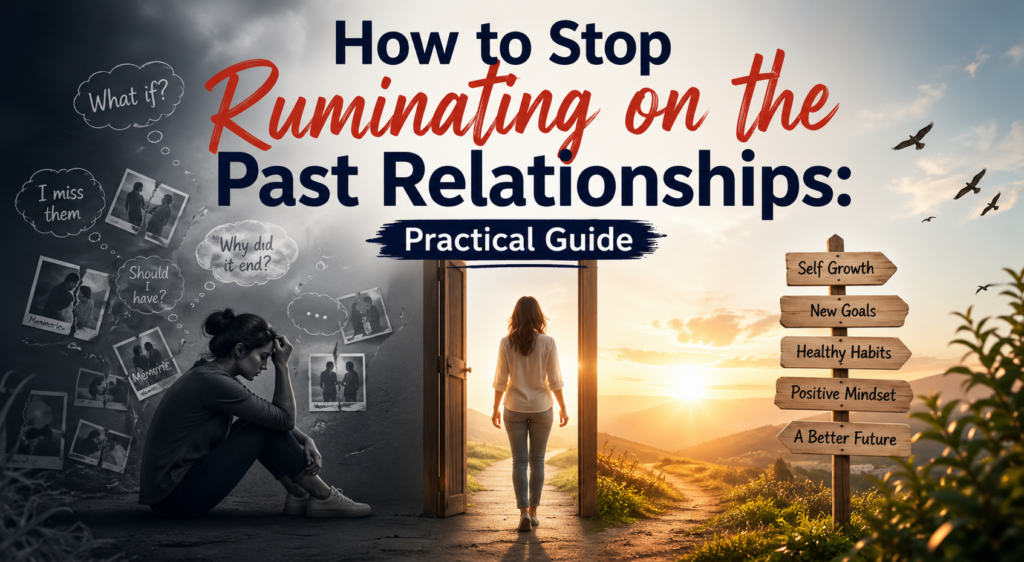
Rumination means repeating the same thoughts again and again. In relationships, it often looks like this:
- Replaying arguments
- Overanalyzing words or actions
- Imagining different outcomes
- Blaming yourself or the other person
These thoughts feel productive, but they are not. Instead, they drain your energy.
When you understand this pattern, you take the first step toward learning how to stop ruminating on the past relationships.
Why You Keep Thinking About the Past
1. Lack of Closure
Sometimes, relationships end without clear answers. Your brain tries to fill the gaps.
2. Emotional Attachment
Strong emotions leave deep marks. Love, pain, and loss stay in memory longer.
3. Fear of Repeating Mistakes
You may think that overthinking will protect you. However, it often traps you instead.
4. Low Self-Worth
You might blame yourself more than needed. This habit keeps you stuck.
Recognizing these triggers helps you move closer to how to stop ruminating on the past relationships.
The Real Cost of Rumination
Rumination does not just waste time. It affects your life in real ways:
- It increases stress and anxiety
- It lowers your confidence
- It blocks new opportunities
- It harms your mental health
Therefore, learning how to stop ruminating on the past relationships is not optional. It is necessary.
How to Replace Rumination With Productive Actions
Step 1: Accept That the Past Cannot Change
This truth is simple but powerful.
You cannot change what happened. However, you can change how you respond to it.
Say this to yourself:
“I accept what happened, and I choose to move forward.”
Acceptance is the foundation of how to stop ruminating on the past relationships.
Step 2: Interrupt the Thought Loop
You need to break the cycle when it starts.
Try these methods:
- Count backward from 100
- Take a short walk
- Focus on your breathing
- Shift to a task
Each time you interrupt the loop, you weaken it.
This is a key technique in how to stop ruminating on the past relationships.
Step 3: Limit Your Thinking Time
You do not need to suppress thoughts completely. Instead, control them.
Set a “thinking window” of 10 to 15 minutes a day. During this time:
- Reflect on your thoughts
- Write them down
- Then stop
Outside this window, redirect your mind.
This strategy helps you master how to stop ruminating on the past relationships without feeling overwhelmed.
Step 4: Challenge Your Thoughts
Not every thought is true.
Ask yourself:
- Is this fact or assumption?
- Am I blaming myself unfairly?
- What would I tell a friend in this situation?
Often, you will see that your thoughts are exaggerated.
This mental shift plays a major role in how to stop ruminating on the past relationships.
Step 5: Replace Rumination With Action
Thoughts lose power when you act.
Instead of thinking:
- Start a new hobby
- Exercise regularly
- Learn a skill
- Connect with people
Action creates momentum. Momentum creates change.
This is one of the most effective ways for how to stop ruminating on the past relationships.
Step 6: Create New Meaning
Every relationship teaches something.
Ask yourself:
- What did I learn?
- How have I grown?
- What will I do differently next time?
When you focus on growth, the past becomes a lesson, not a burden.
This mindset shift supports how to stop ruminating on the past relationships.
Step 7: Practice Mindfulness Daily
Mindfulness keeps you in the present moment.
Simple ways to practice:
- Focus on your breath
- Notice your surroundings
- Observe your thoughts without judgment
When your mind stays present, it stops wandering into the past.
This is a powerful tool for how to stop ruminating on the past relationships.
Step 8: Reduce Triggers
Certain things can restart your thoughts:
- Old messages
- Social media profiles
- Photos
- Familiar places
Limit exposure to these triggers.
This step makes how to stop ruminating on the past relationships much easier.
Step 9: Build a Strong Routine
Structure helps your mind stay focused.
Create a daily routine that includes:
- Work or study
- Physical activity
- Relaxation time
- Social interaction
A busy and balanced schedule leaves less room for rumination.
Consistency is essential in how to stop ruminating on the past relationships.
Step 10: Talk It Out
Sometimes, you need to express your thoughts.
Talk to:
- A trusted friend
- A family member
- A therapist
Sharing your feelings reduces their intensity.
This step supports your journey in how to stop ruminating on the past relationships.
Step 11: Practice Self-Compassion
Be kind to yourself.
You did the best you could with what you knew at the time.
Replace self-criticism with understanding.
Self-compassion is a core part of how to stop ruminating on the past relationships.
Step 12: Focus on Your Future
Your future deserves more attention than your past.
Set goals:
- Personal goals
- Career goals
- Health goals
When you look ahead, the past loses its grip.
Future focus strengthens your ability in how to stop ruminating on the past relationships.
Common Mistakes to Avoid
Even with effort, some habits can slow your progress.
Avoid these:
- Constantly checking your ex online
- Seeking repeated validation
- Overanalyzing every detail
- Isolating yourself
Recognizing these mistakes helps you stay on track with how to stop ruminating on the past relationships.
Signs You Are Making Progress
You may not notice change immediately. However, small signs matter:
- You think less about the past
- Your mood improves
- You feel more present
- You enjoy daily activities again
These signs show that you are learning how to stop ruminating on the past relationships effectively.
When to Seek Professional Help
If rumination feels uncontrollable, consider professional support.
You may need help if:
- Thoughts interfere with daily life
- Anxiety or depression increases
- Sleep is affected
A mental health professional can guide you through how to stop ruminating on the past relationships in a structured way.
Conclusion: Choose Peace Over the Past
You cannot erase your past. However, you can stop living in it.
Learning how to stop ruminating on the past relationships takes time, patience, and effort. Each step you take brings you closer to peace.
Focus on what you can control. Take action daily. Be kind to yourself.
Your past is a chapter, not the whole story. Your future is still being written.